
Boba Beacon
Designing a Personalized Discovery Platform for Boba Shops
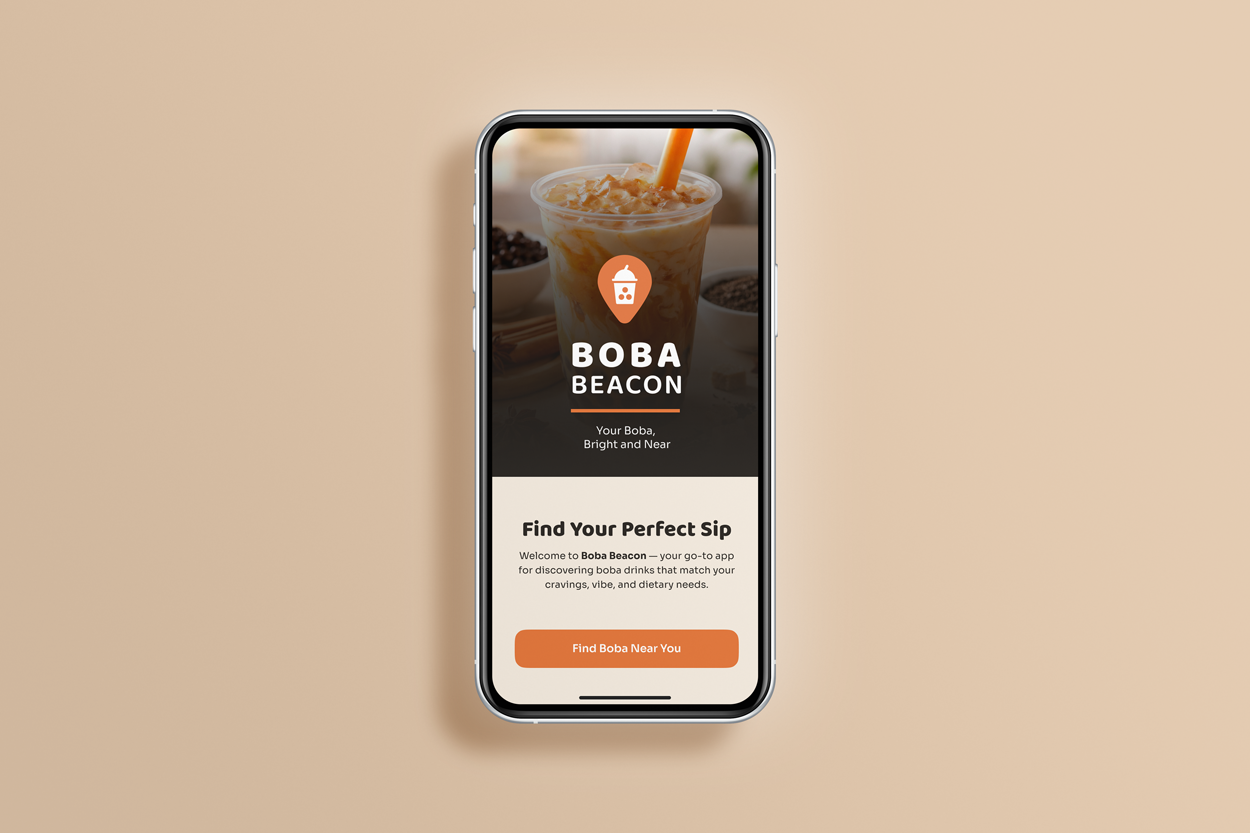
Boba Beacon is a mobile discovery platform designed to help users quickly find drinks and shops based on cravings, dietary needs, location, and shop vibe.
Role • Sole UX Researcher & Product Designer
Timeline •75 Hours
Platform •Mobile (iOS-focused)
Tools •Figma · Adobe Creative Cloud
The Problem
Boba shops continue to grow in popularity, but discovering where to go—and what to order—remains surprisingly difficult.
Menus are inconsistent across platforms, dietary information is often unclear, and existing discovery tools like Yelp or Google Maps prioritize location and reviews over drink-specific discovery.
As a result, users often rely on guesswork, scrolling through reviews or checking multiple menus to confirm ingredients. For users with dietary restrictions or specific cravings, this friction can lead to decision fatigue—or abandoning discovery altogether.
The Opportunity
Boba Beacon reimagines drink discovery as a boba-first experience, allowing users to search by flavor profile, dietary needs, proximity, and shop vibe.
Rather than starting with the shop, the experience begins with the drink itself—helping users quickly identify options that match their cravings and dietary preferences.
By prioritizing transparency and fast filtering, Boba Beacon helps users make confident decisions faster while giving vendors clearer ways to showcase their menus and offerings.
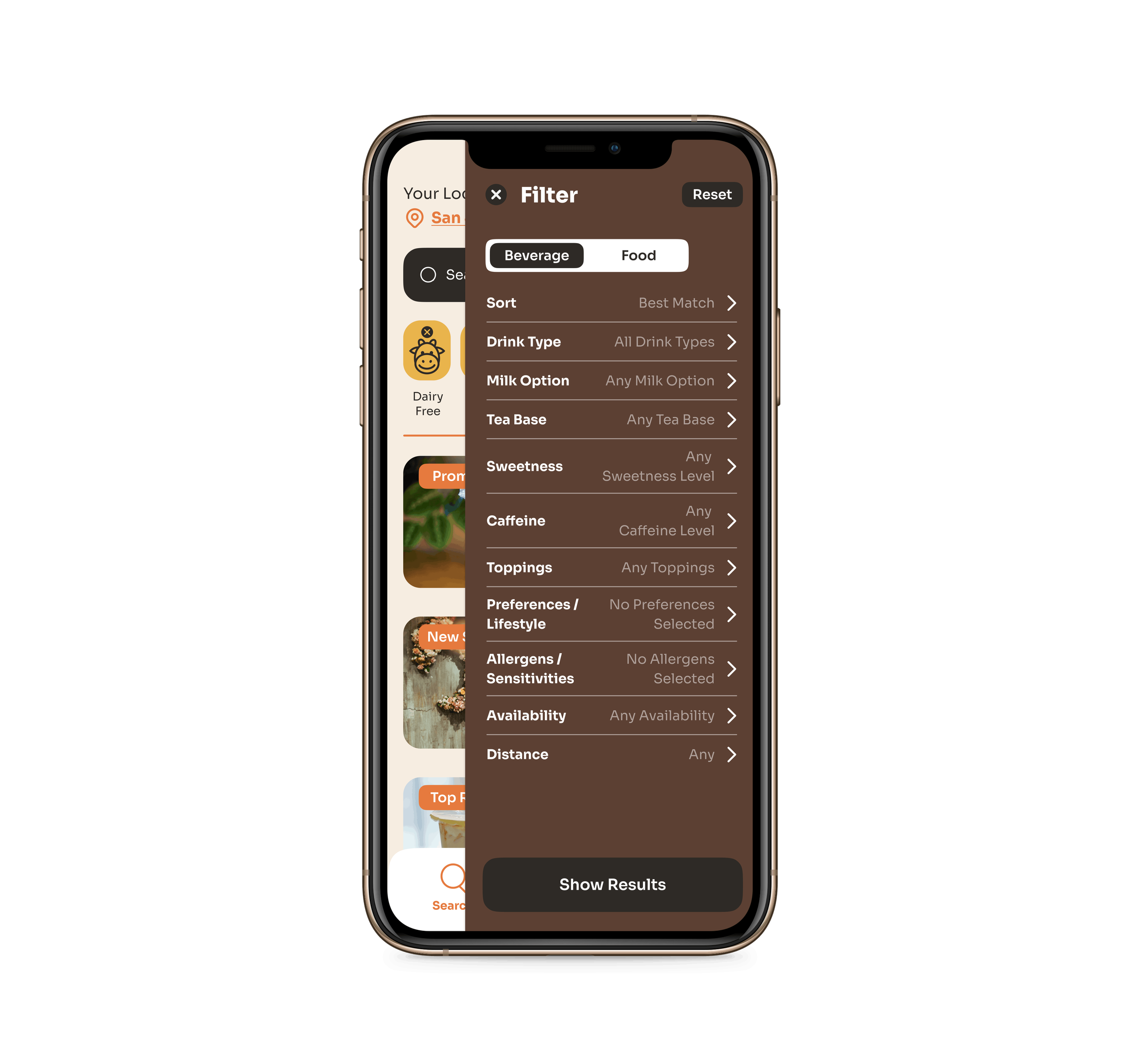
High-Fidelity Preview: Boba Beacon’s drink-first discovery experience, where users filter drinks by flavor, dietary needs, and location before choosing a shop.
Research
To better understand how users currently discover boba shops and drinks, I evaluated existing food discovery platforms and conducted interviews with frequent boba drinkers.
The research focused on three questions:
How do users currently search for drinks?
What challenges do they face when evaluating menus?
How do dietary considerations influence decision-making?
Competitive Landscape
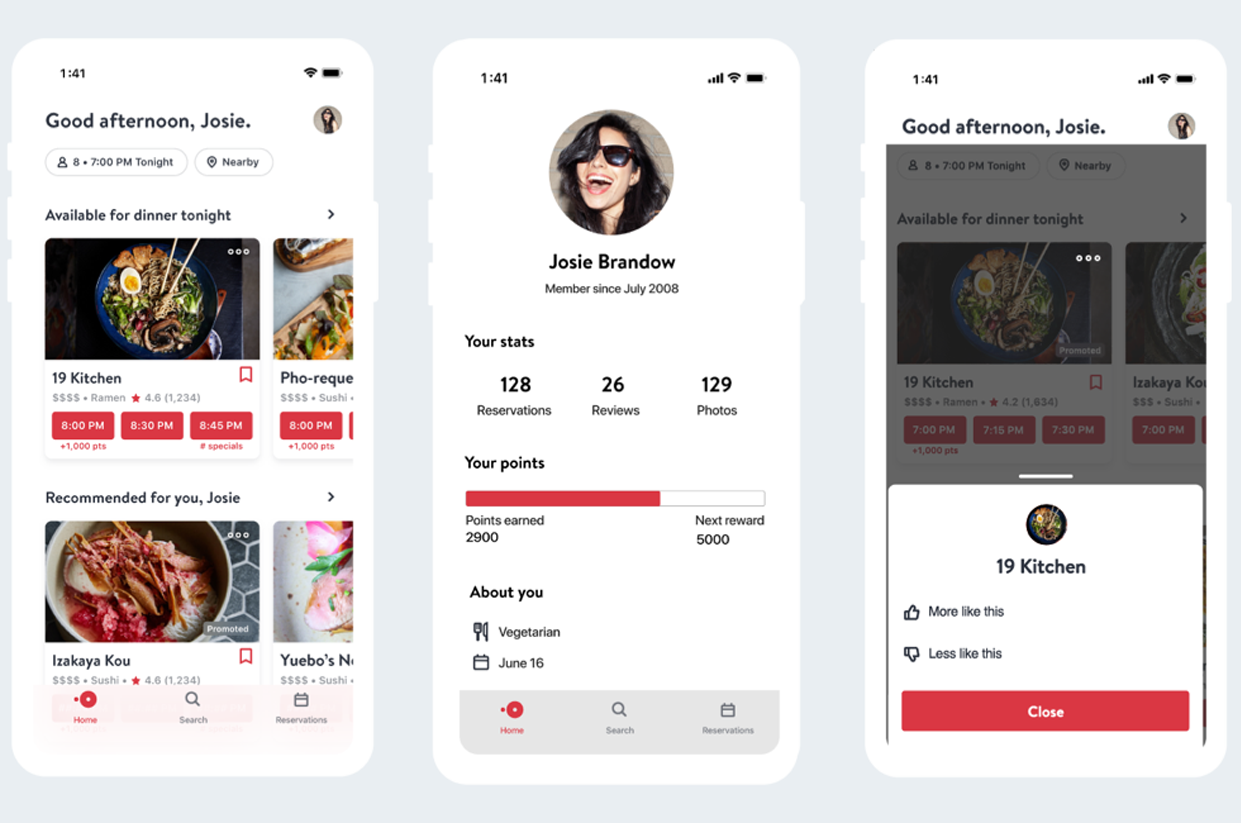
To understand how users currently discover boba shops and drinks, I evaluated several food discovery platforms and compared how they support search, filtering, and menu transparency.
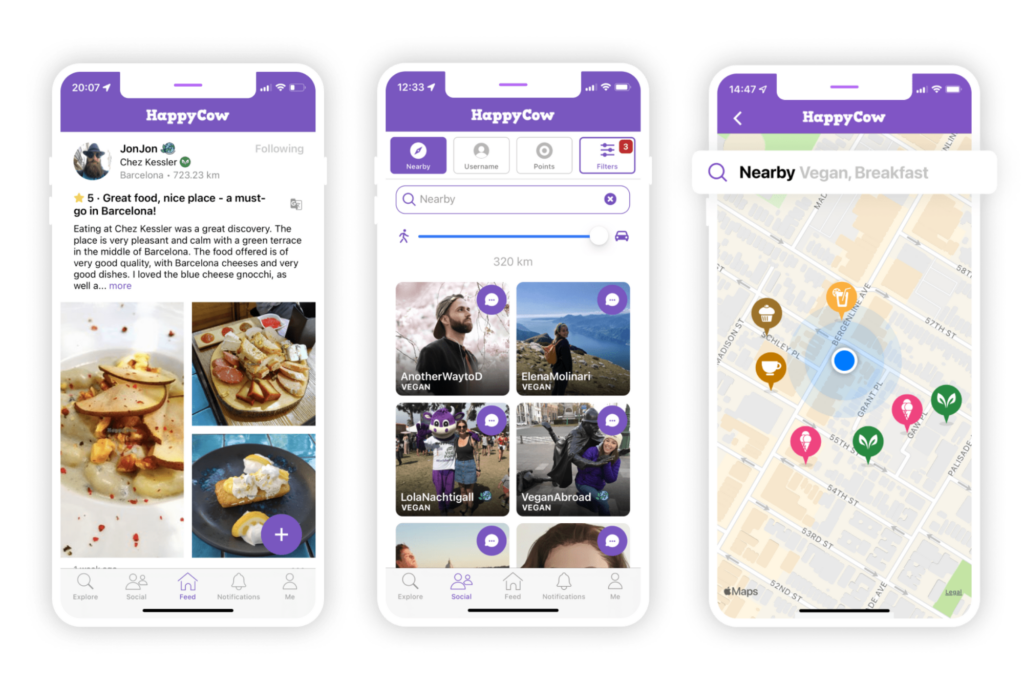
Yelp
A widely used review platform for discovering nearby restaurants and cafes.
✅ Strong review ecosystem
✅ Popular for local discovery
✅ Photos provide visual context for items and shops
❌ Limited dietary filtering
❌ Drink discovery buried within menus
❌ No filtering by flavor or drink type
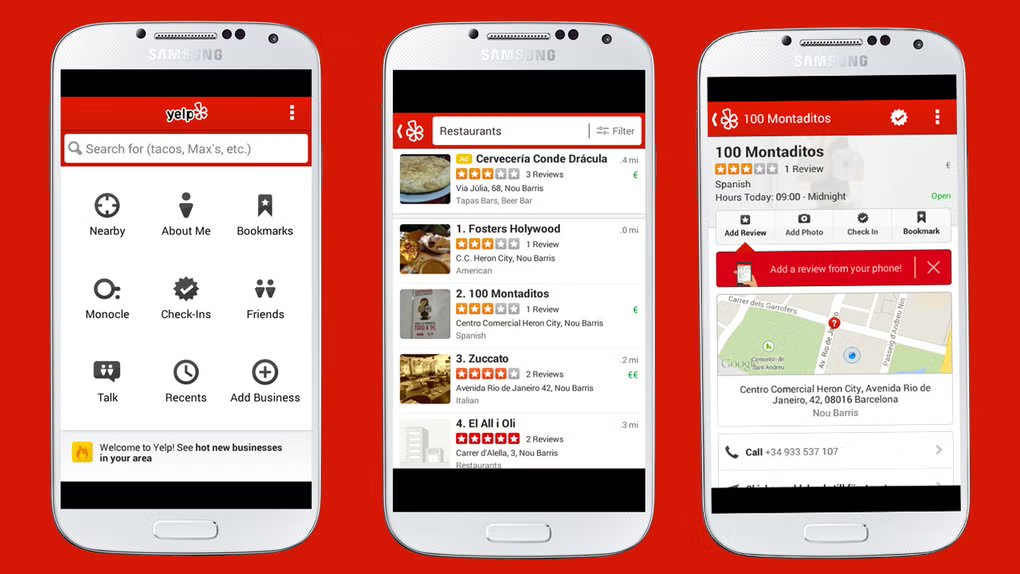
Happy Cow
A niche platform designed for discovering vegan and plant-based restaurants.
✅ Strong dietary filtering
✅ Clear labeling for vegan and vegetarian options
✅ Dedicated community for dietary-conscious users
❌ Primarily restaurant-focused
❌ Limited drink-level exploration
❌Smaller coverage of boba shops
Open Table
A restaurant discovery platform centered around reservations and dining availability.
✅ Strong restaurant search and booking tools
✅ Clear location-based discovery
✅ Structured restaurant listings
❌ Focused on reservations rather than menu exploration
❌ Limited filtering for dietary preferences
❌ No drink-level discovery
Key Insights
Food discovery platforms prioritize restaurants rather than individual drinks, requiring users to choose a shop before understanding what they can actually order.
Dietary filtering and ingredient transparency are inconsistent across platforms, often forcing users to rely on reviews or external sources to confirm options.
This creates an opportunity for a drink-first discovery experience that helps users quickly find drinks matching their cravings, dietary needs, and nearby availability.
User Insights
I conducted moderated interviews with frequent boba drinkers representing a range of lifestyles and dietary needs, including dairy-free, gluten-free, and low-sugar users.
Using affinity mapping, I synthesized recurring themes around menu transparency, discovery patterns, and decision fatigue.
Key Insights
Dietary Transparency
Users often struggle to confirm whether drinks meet their dietary needs.
Design Impact
→ Introduced drink-level dietary filters and clearer ingredient labeling.
“I’m lactose intolerant, so I always have to double-check if they have milk alternatives.”
— Mei-Ling L.
“It’s frustrating when I can’t tell if I can drink anything there.”
— Ken T.
Drink Discoverability
Most discovery tools prioritize restaurants first, forcing users to browse menus after selecting a shop..
Design Impact
→ Shifted the experience toward drink-first discovery, allowing users to filter drinks before choosing a shop.
“I’d love to search by mood or craving. That feels more natural than just location or ratings.”
— Hana T.
“If an app could filter by cravings and location together, that would save me so much time.”
— Jiro S.
Decision Fatigue
Exploring new drinks often requires scrolling through multiple menus or reviews.
Design Impact
→ Prioritized fast filtering and confirmation states to help users make confident decisions more quickly.
“If I could filter by dairy-free or sugar level, that would take away a lot of the guesswork.”
— Jiro S.
“Yelp doesn’t make it easy to filter for dietary needs. I end up digging through reviews or just calling.”
— Mei-Ling L.
Design Focus
Research insights informed the design of two key perspectives within the platform ecosystem.
Customer Perspective
Emily
Health-Conscious Parent
AGE 32
GENDER FEMALE
STATUS MARRIED
(Parent of Two Young Children)

Primary Need
Quickly identify boba options that are safe, healthy, and clearly labeled
Key Goal
Make confident drink choices for herself and her children without wasting time
Top Frustration
Unclear menus and inconsistent dietary information across platforms
Design Focus
Dietary filters, ingredient transparency, and fast decision-making
Vendor Perspective
Kevin
Small Business (Boba Shop) Owner
AGE 39
GENDER MALE
STATUS MARRIED

Primary Need
Clearly showcase menu items, ingredients, and dietary options to customers
Key Goal
Increase visibility and trust to attract high-intent local customers
Top Frustration
Limited marketing reach and difficulty standing out in a crowded market
Design Focus
Simple menu management, accurate dietary tagging, and shop visibility
Design Principles
To guide product decisions, I defined three principles based on research insights.
Reduce Decision Friction
Help users quickly identify drinks that match cravings and dietary needs without navigating multiple menus.
Build Trust Through Transparency
Provide clear ingredient and dietary labeling so users can make confident decisions.
Support Both Sides of the Platform
Design tools that work for both customers discovering drinks and vendors managing menu information.
Information Architecture
I mapped the product structure through a sitemap to establish content hierarchy. The architecture ensured users could move quickly from drink discovery to shop selection, while vendors could easily manage menu data.
Sitemap

Design Exploration
Mid-fidelity wireframes were created to explore layout, hierarchy, and interaction patterns before moving into visual design.
The exploration focused on key parts of the product experience, including homepage discovery, drink detail transparency, and vendor dietary tagging workflows.
Screens included the application homepage, a sample boba product page with ingredients and dietary tags, and a vendor interface for assigning dietary attributes.
These wireframes helped validate the discovery and menu management flows before refining the interface in high-fidelity design.

Final Design
High-fidelity screens refined both usability and visual identity across Boba Beacon’s core experiences. The final design supports drink discovery for customers, clear menu management for vendors, and a visual system that reinforces clarity and approachability.

Brand Design
The Boba Beacon visual identity emphasizes clarity, friendliness, and quick recognition. A custom logo and dietary filter icon set support intuitive navigation while reinforcing the product’s focus on transparency and discovery.
High-Fidelity Screens
The final interface supports two primary flows: helping customers quickly discover drinks that match their cravings and dietary needs, and enabling vendors to manage menu items and dietary information with minimal friction.
Customer Discovery
Filter drinks, review ingredients, and quickly find nearby shops offering relevant options.

Vendor Menu Management
Add drinks, apply dietary tags, and maintain accurate menu listings for customers.

Iterations
Usability testing informed several improvements across filtering, navigation, and menu transparency.
These refinements reduced hesitation and improved clarity throughout the discovery experience.

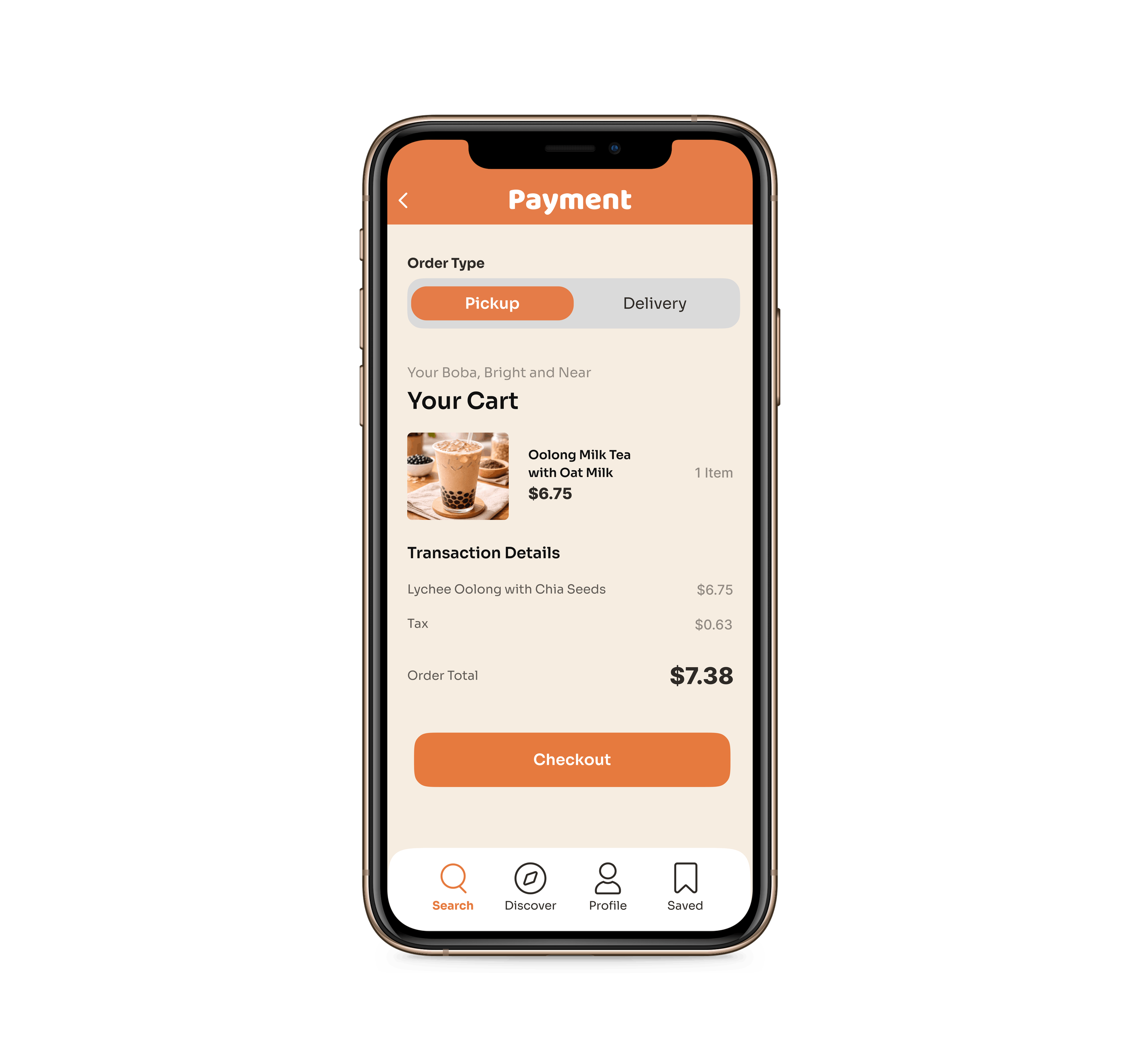
Interactive Prototype
The final prototype demonstrates the end-to-end discovery experience, from filtering drinks to identifying nearby shops and reviewing menu details.
Impact
The design introduces mechanisms that could reduce decision friction and improve menu transparency during drink discovery.
Potential Impact
• Faster identification of dietary-safe drink options
• Reduced time spent searching through menus and reviews
• Increased confidence when exploring new shops and drinks
• Improved visibility for local vendors presenting menu information clearly
Reflection
Designing Boba Beacon highlighted how clarity and transparency influence everyday decision-making.
Key Learnings
• Small clarity cues significantly improve decision confidence
• Dietary transparency builds emotional trust with users
• Designing two-sided platforms requires balancing user and vendor needs