
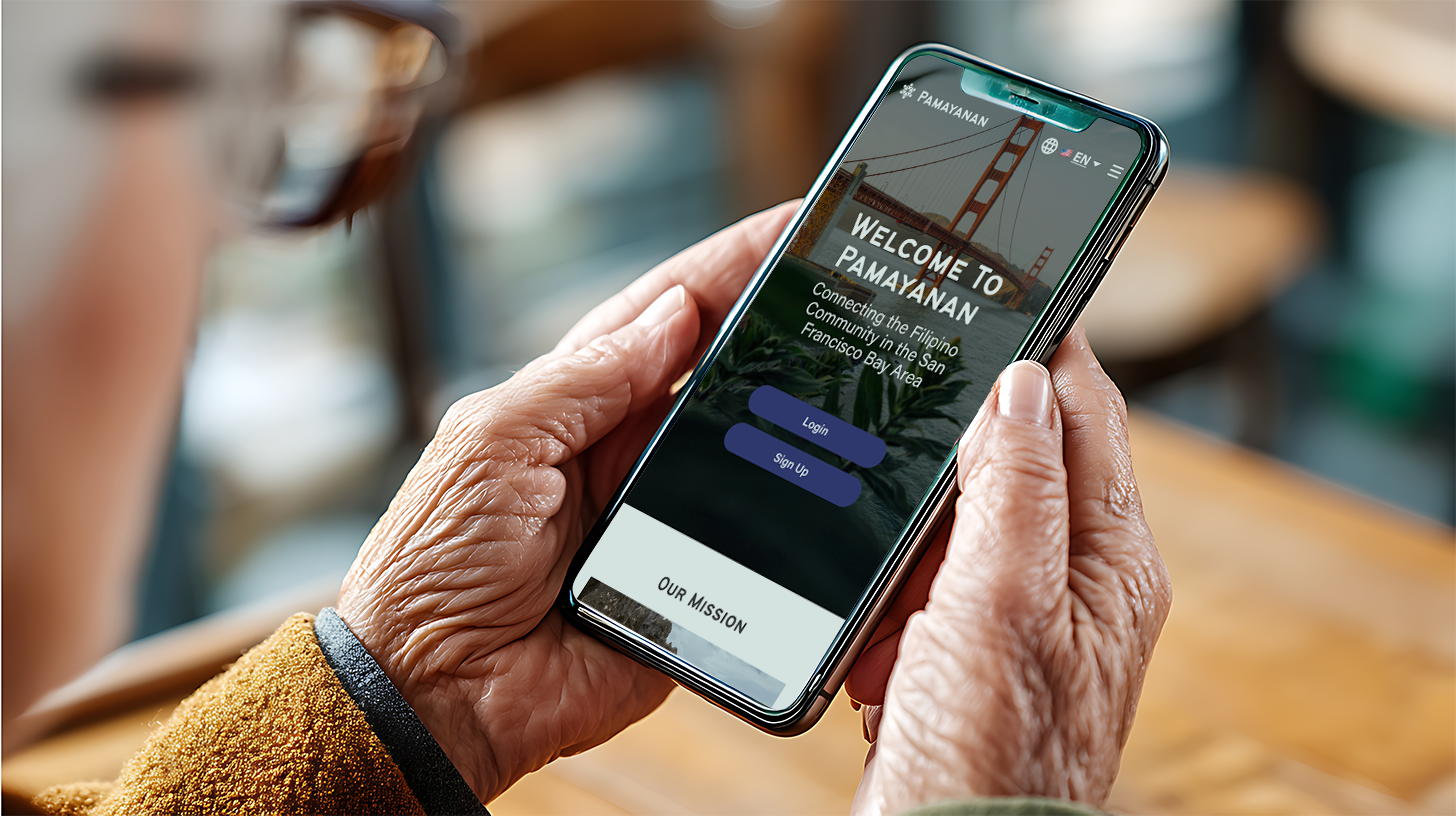
Pamayanan
Designing a Bilingual Community & Resource Platform for Filipino Immigrants
Pamayanan is a mobile-first, bilingual platform designed to help Filipino immigrants in the San Francisco Bay Area navigate essential services, housing, and community life — all in one centralized, culturally informed experience.
Role • Sole UX Researcher & UX Designer
Timeline •65 Hours
Platform •Web (Mobile-Focused)
Tools •Figma · Adobe Creative Cloud
The Problem
Filipino immigrants in the Bay Area rely on fragmented, inconsistent sources — Facebook groups, word of mouth, and general search engines — to navigate housing, legal systems, healthcare, and community support.
Information is difficult to verify, often outdated, and rarely tailored to Filipino cultural or language needs.
This creates confusion, stress, and isolation during already high-stakes life transitions.
Unlike culturally focused platforms built around community and language needs, existing tools offer no centralized, vetted resource hub — leaving newcomers without reliable guidance when they need it most.
The Opportunity
Pamayanan (Tagalog for "community" or "togetherness") reimagines resource discovery as a community-first experience — one that centers language, culture, and trust.
Rather than requiring users to piece together information from multiple sources, the platform brings essential resources, bilingual support, and community connection into a single mobile-optimized experience.
By prioritizing accessibility and cultural relevance, Pamayanan helps Filipino immigrants make confident decisions during critical moments of transition.
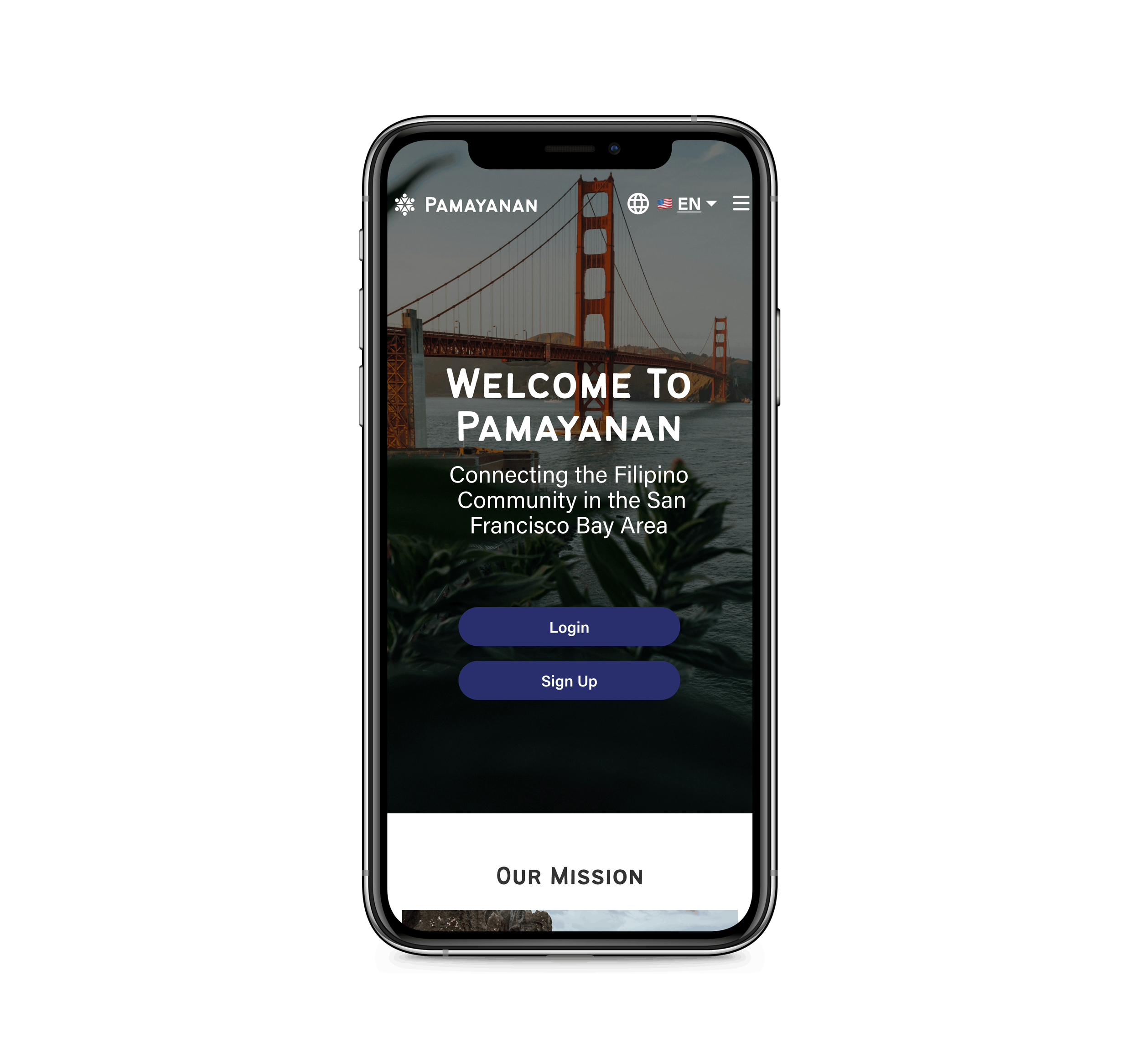
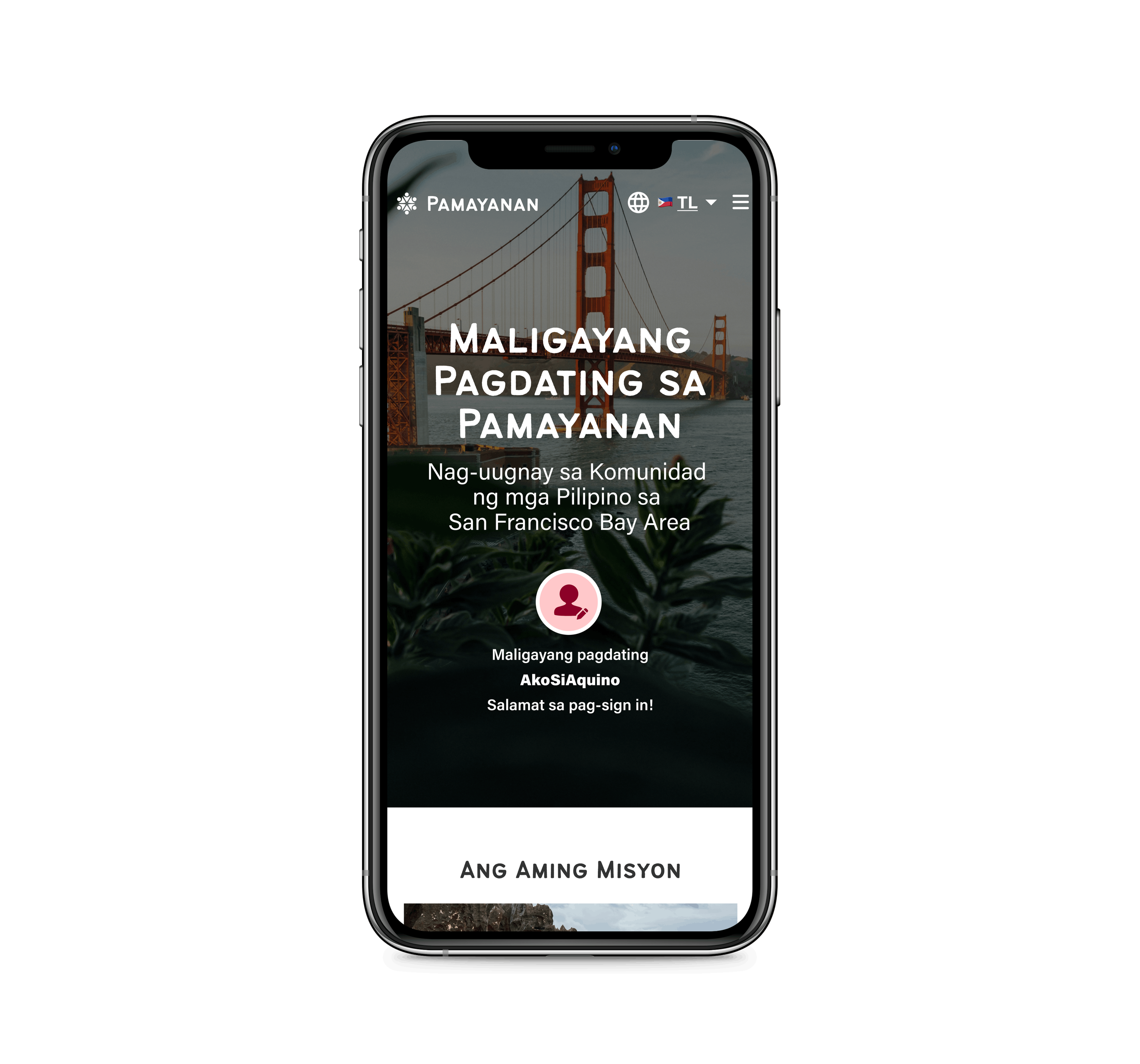
High-Fidelity Preview: A bilingual, mobile-first resource platform designed for Filipino immigrants.
Research
To understand how Filipino immigrants currently find and trust information, I evaluated existing community organizations and digital platforms, then conducted interviews with first- and second-generation Filipino immigrants, community members, and small business owners.
The research focused on three questions:
How do Filipino immigrants currently find and verify resources?
What challenges do they face with language and cultural accessibility?
How does community trust influence where and how they seek support?
Competitive Landscape
I reviewed Filipino community organizations, nonprofits, and cultural centers across California, evaluating each across three dimensions:
Centralization of resources
Digital accessibility and mobile experience
Multilingual and immigrant-specific support
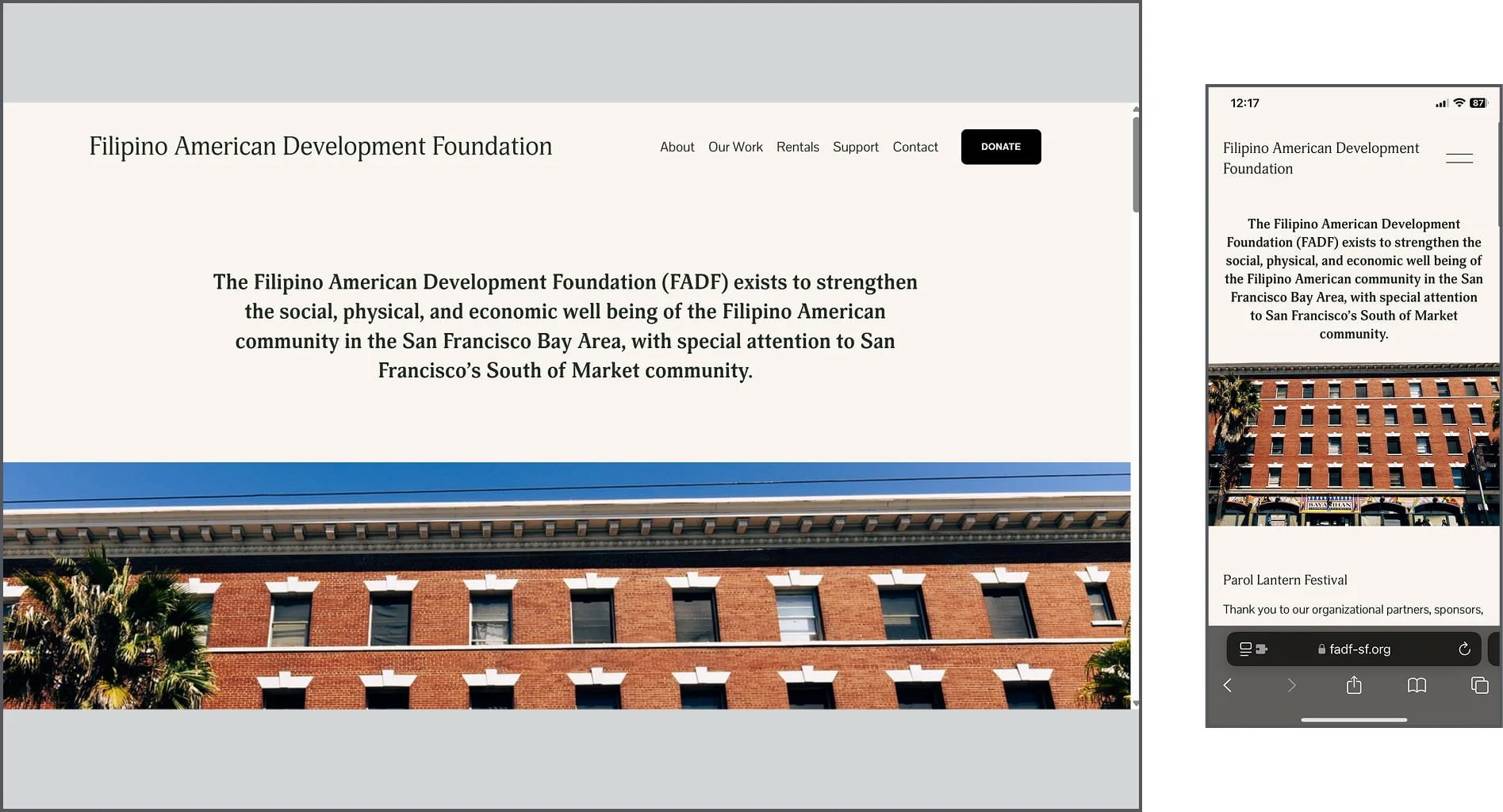
Most organizations provide valuable in-person services but lack strong digital infrastructure, centralized resource discovery, or mobile-first access — revealing a clear opportunity for a platform-level solution.
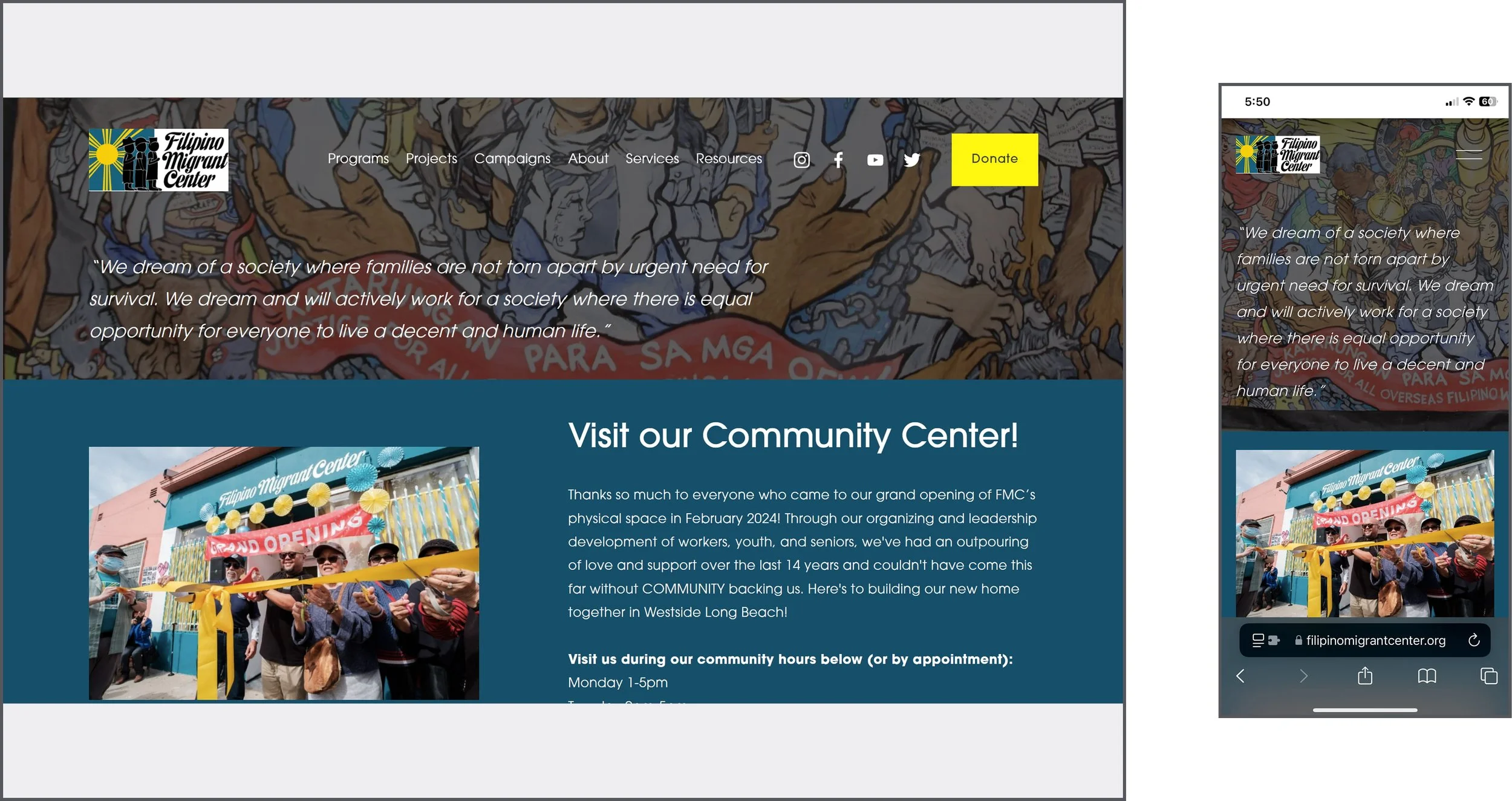
Filipino Migrant Center (FMC)
✅ Strong legal advocacy and "Know Your Rights" education
✅ Deep trust and credibility within low-income immigrant communities
❌ Limited geographic reach (primarily Southern California)
❌ Minimal digital presence or self-serve online resources
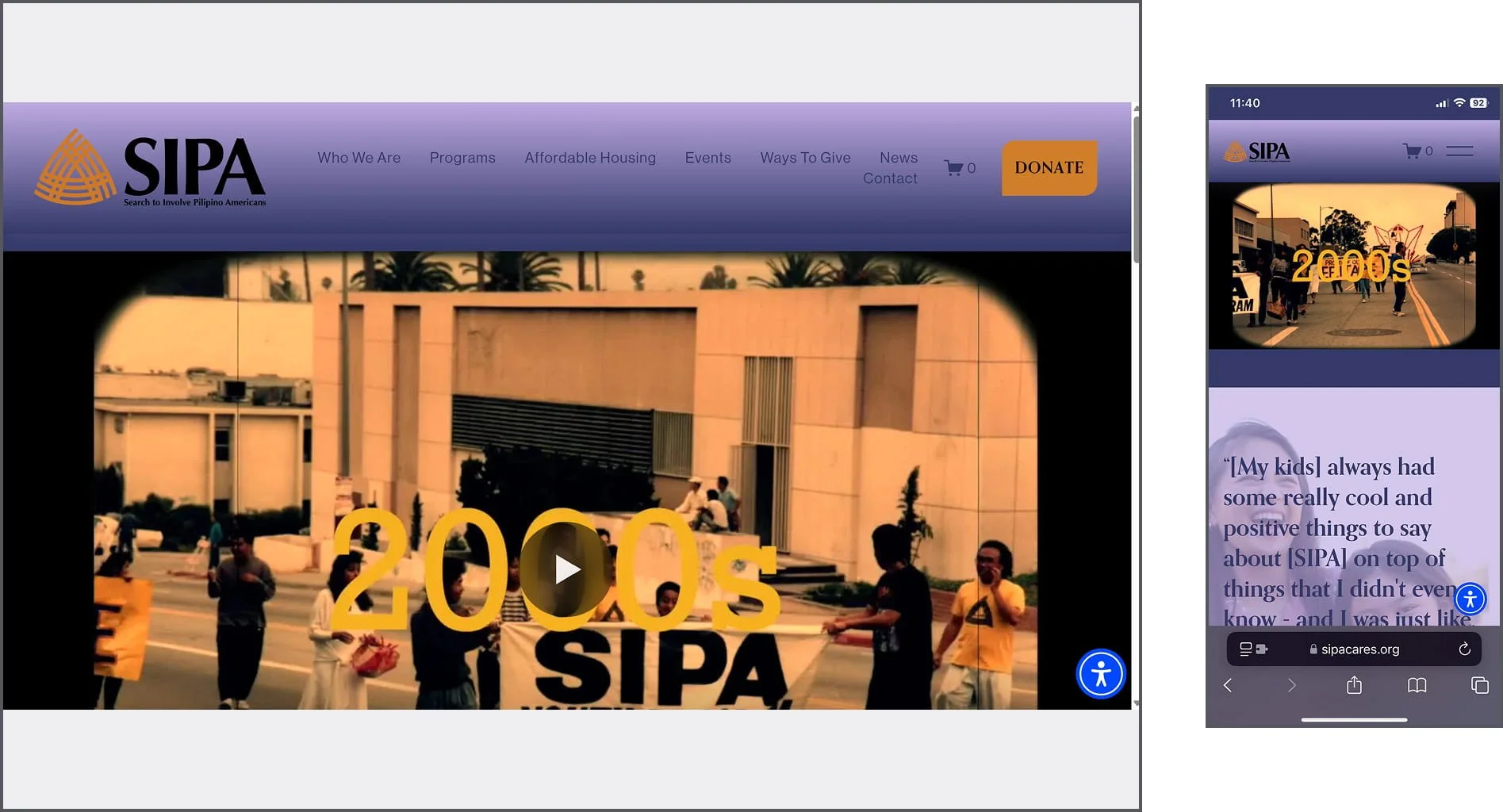
Search to Involve Pilipino Americans (SIPA)
✅ Long-standing, culturally rooted organization with strong community trust
✅ Holistic programming across youth, arts, wellness, and leadership
✅ Strong emphasis on empowerment and cultural preservation
❌ Not designed as a centralized resource hub for housing, legal, or relocation needs
❌ No searchable directory or digital onboarding for newcomers
Filipino Development
✅ Long-standing, culturally rooted organization with strong community trust
✅ Active Bay Area presence with cultural and educational services
✅ Serves a wide range of age groups, including families and seniors
❌ Limited immigrant-specific onboarding or relocation guidance
❌ No centralized, searchable directory for essential services
❌ Multilingual and mobile-first accessibility is underdeveloped
Key Insights
Most organizations provide valuable in-person services but lack strong digital infrastructure, centralized resource discovery, or mobile-first access.
No platform combines centralized resource discovery with multilingual access and community connection in a mobile-optimized experience.
This gap highlights an opportunity for a culturally informed platform that acts as a digital bridge — not replacing organizations, but making their resources easier to find and use.
User Insights
I conducted moderated interviews with first- and second-generation Filipino immigrants, community members, and small business owners across multiple age groups.
Using affinity mapping, I synthesized recurring patterns around information reliability, language access, and community trust.
Key Insights
Fragmented & Unreliable Information
Immigrants consistently relied on multiple unverified sources to find basic resources, leading to confusion and lost time.
Design Impact
→ Introduced a centralized Essential Services Directory with vetted listings for housing, healthcare, legal aid, and education.
“I’m learning everything by trial and error.”
— Gloria M.
“We had to check multiple sources just to see what was accurate.”
— James R.
Language Barriers & Confidence
Participants with limited English proficiency described feeling excluded by English-only interfaces and anxious about missing critical information.
Design Impact
→ Informed a prominent English/Tagalog language toggle and AI-assisted dialect support (e.g., Ilocano), prioritized at the top of the interface rather than buried in settings.
“Seeing Tagalog made me feel less nervous about missing something important.”
— Isa L.
“My parents struggle when everything is only in English.”
— Dante C.
Community as a Resource
Participants described other Filipinos as their most trusted source of information — more than official institutions or search engines.
Design Impact
→ Shaped the Community Message Board with searchable sub-groups and a Cultural Support hub, giving informal knowledge sharing a structured and trusted digital home.
“Most of what I learned came from other Filipinos who had already been through it.”
— Felipe S.
“Community isn’t just social. It’s how we get reliable information.”
— Gloria M.
Design Focus
Three user groups emerged from research:
Recent immigrants navigating housing, employment, and language barriers
Long-time residents and small business owners supporting the Filipino community
Second-generation Filipino Americans seeking cultural connection
While all three informed the broader platform, one persona most directly guided design decisions.
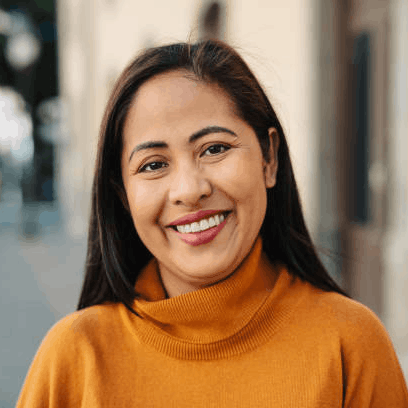
Marites
Recent Immigrant & Caregiver
AGE 42
GENDER FEMALE
STATUS MARRIED
(Parent of Three Children)
Primary Need
Clear, trustworthy guidance for housing, legal processes, and essential services
Key Goal
Build a stable life for her family while adapting to unfamiliar systems and cultural norms
Top Frustration
Information is fragmented, inconsistent, and often inaccessible due to language barriers
Design Focus
Multilingual support (English, Tagalog, and dialect assistance), step-by-step newcomer and housing guides, mobile-first navigation with clear visual hierarchy
Marites represents users facing the highest friction and risk during relocation.
Designing for her ensured the platform prioritized clarity, accessibility, and trust — while the community and cultural features addressed the needs of long-time residents and second-generation users.
Design Principles
Research insights informed three principles that guided the design of Pamayanan.
Reduce Friction for High-Stakes Decisions
Essential resources should be easy to find, verify, and act on — especially during moments of transition.
Build Trust Through Language and Clarity
Bilingual access and cultural relevance are foundational to the platform's usefulness and emotional impact.
Design for the Full Community
The platform should meet users wherever they are — whether navigating a new country or supporting others who are.
Information Architecture
To support both resource discovery and community connection, I mapped the platform structure through a sitemap and supporting task flows covering:
Language switching
AI-assisted dialect support
Essential services browsing
Community message board engagement
One task flow was prioritized as the primary design focus, directly addressing high-frequency, high-stakes needs during early settlement.
A Filipino newcomer wants to quickly find trusted, Filipino-friendly services in their area — such as housing help, healthcare providers, or legal assistance.

Design Exploration
Early wireframes explored how the platform's core features — the Essential Services Directory, Community Message Board, Multilingual Support, and Cultural Support hub — could be structured for mobile-first use without overwhelming users with varying levels of tech literacy.
Mid-fidelity work refined content organization, navigation hierarchy, and task flows — ensuring users could switch languages, find essential services, and engage with the community through clear, familiar interaction patterns.

Mid-fidelity wireframes exploring mobile-first navigation, the Essential Services Directory layout, and the Community Message Board structure.
Final Design
High-fidelity design refined both usability and cultural clarity across Pamayanan's core experiences.
The visual system — including a culturally informed logo and iconography — was designed to feel welcoming and approachable across generations, reinforcing the platform's focus on trust, accessibility, and community.
Brand Design
The Pamayanan brand centers on warmth and cultural familiarity. The custom logo, color palette, and typography work together to create an experience that feels welcoming across generations.

High-Fidelity Screens
The final interface supports four core experiences:
Multilingual resource discovery
Essential services browsing
Community message board engagement
Language switching

Iterations
Usability testing surfaced opportunities to improve language accessibility, navigation clarity, and interaction confidence — especially for older users and non-native English speakers.
Moved language toggle beside the hamburger menu for immediate visibility
Separated language selection and AI assistant into distinct, clearly labeled modules
Increased touch targets and spacing to support accessibility across age groups
Refined visual hierarchy, alignment, and confirmation states across key screens
Applied all updates consistently across English and Tagalog versions of the interface
Interactive Prototype
The prototype demonstrates how users can switch languages, browse and filter essential services, and engage with community resources — all through clear, mobile-optimized flows.
Impact
Usability testing showed strong task completion, high emotional resonance around language access, and increased user confidence across core platform flows.
High task completion with minimal assistance across all tested flows
100%
Of players completed core tasks successfully.
4.3 / 5
Average satisfaction rating.
Reflection
Language and cultural relevance are emotional design decisions, not just functional ones.
Small UI choices — like where a language toggle lives — significantly affect user confidence and trust.
Designing systems across two languages requires consistency as a core constraint, not an afterthought.
Future iterations could explore onboarding flows for first-time users, mentorship and community matching features, and localized alerts for housing and legal updates.